How to Use Retinol: The Right Routine and Product for Every Skin Type
Not sure when to start retinol or how to introduce it without irritating your skin? I've got you covered!
Summary
I recently took a MasterClass called Skin Health, and retinoids was one of the topics covered — so consider this your shortcut to what I learned. Yep!
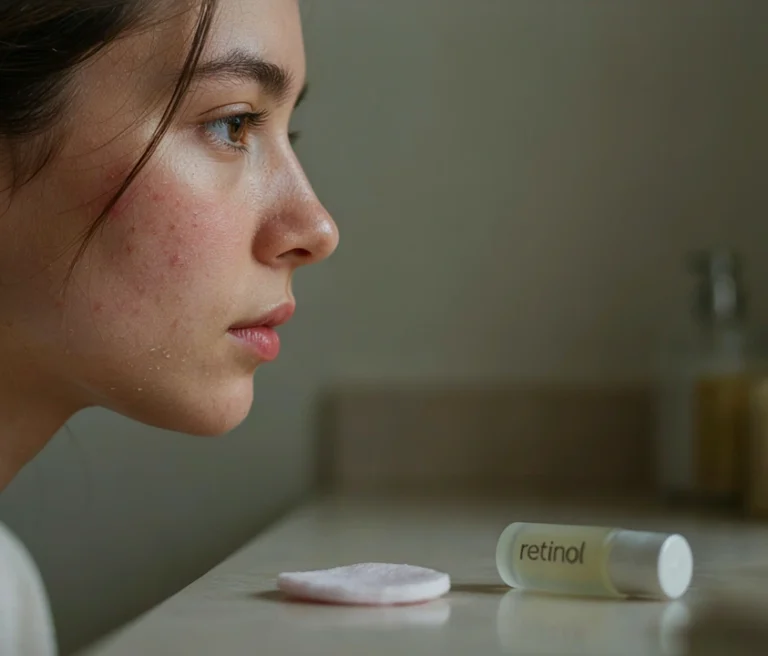
Retinoids are vitamin A derivatives that speed up cell turnover, and they’re behind some of the most well-studied benefits in skincare, from smoother texture to fewer fine lines and less hyperpigmentation. They’re also easy to get wrong if you jump in too fast or use the wrong strength, which is why building the right routine matters just as much as picking the right product.
Here’s everything you need to know: what retinoids actually do, how to introduce them safely, and which formula makes sense for your skin type.
Table of Contents
What Are Retinoids, Exactly? (And When to Start)
Retinol is one member of a bigger family called retinoids, all derived from vitamin A. The retinoid umbrella covers:
Retinol
Adapalene
Tazarotene
Alitretinoin
Bexarotene
Mid to late 20s is generally considered a safe point to introduce retinoids into your routine.
What Retinoids Actually Do for Your Skin
They smooth skin texture by speeding up cell turnover, pushing newer cells up to the surface. Your epidermis naturally renews itself every 21 to 28 days, but that cycle slows down with age — retinoids help keep it running efficiently.
They encourage collagen production deeper in the dermis.
They soften fine lines and wrinkles.
They fade hyperpigmentation.
They help prevent acne.
Prescription-strength formulas are roughly 20 times more potent than what you’ll find over the counter. With OTC versions, expect it to take about 18 to 20 weeks before you notice real change — this is an ingredient where consistency matters more than anything.
How to Build a Retinol Routine Without Irritating Your Skin
Apply a moisturizer beforehand to act as a buffer.
Keep it away from the eyes, nose, and mouth, or use a retinol formula made specifically for the eye area.
Test a low concentration on your neck first, since the skin there is thinner and more reactive.
Ease in with just one application a week and build up from there.
Picking a Retinoid Based on Your Skin Type
If you’re new to retinoids or have sensitive skin, start with a lower-strength, over-the-counter option (0.01% to 0.03%).
Check that the active ingredient is retinol, retinal, or retinaldehyde.
Choose a leave-on formula — a serum or moisturizer — packaged in something opaque.
If your skin isoily, look for retinol or retinal along with adapalene (0.3%-0.5%), in a gel or lightweight cream. If your skin is dry, look for retinol or retinal paired with ceramides and squalane (0.1%-0.3%), in a richer cream formula.
Steer clear of rinse-off products, like cleansers, for this ingredient.
For combination skin, look for retinol combined with niacinamide and glycerin (0.25%-0.5%), in a gel or lotion.