What’s My Hair Type, its Texture and Porosity Type?
Summary
I recently watched an online hair care class on MasterClass, and I couldn’t wait to share what I learned. It completely changed the way I communicate with my hair and helped me choose the right products. I hope the tips and information in this post help you understand your hair a little better.
Table of Contents
Hair Types
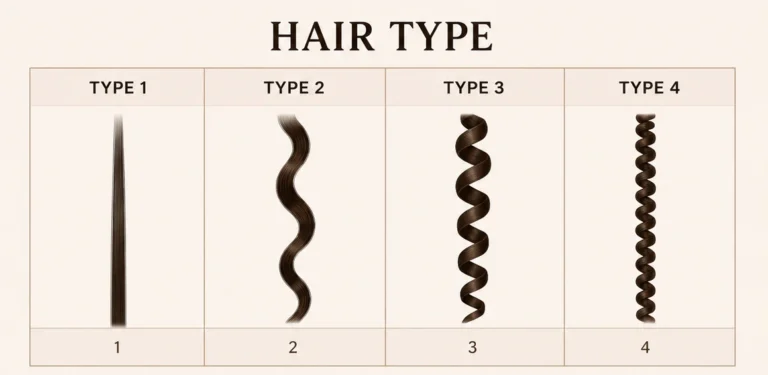
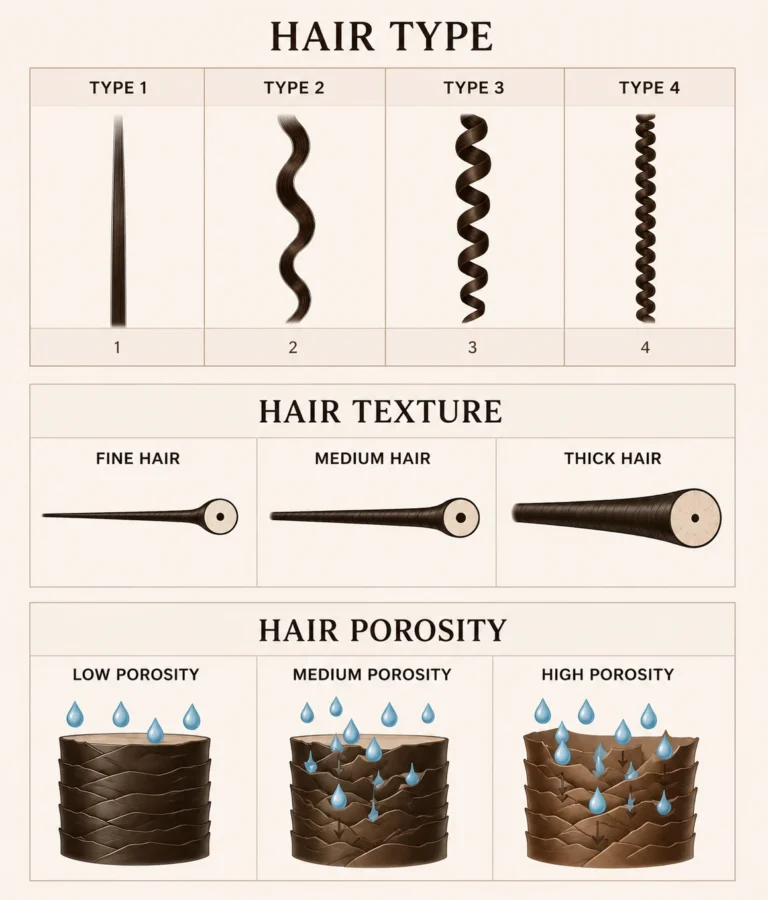
Hair type refers to your hair’s natural pattern. There are four main hair types:
Type 1 – Straight
Straight hair has no natural curl or wave. It tends to reflect light easily, making it appear shinier than other hair types.
Type 2 – Wavy
Wavy hair forms loose “S” shapes. It sits between straight and curly hair and can range from soft waves to more defined bends.
Type 3 – Curly
Curly hair forms well-defined curls or ringlets. It usually has more volume and benefits from products that provide moisture and curl definition.
Type 4 – Coily
Coily hair has tight curls or zigzag-shaped coils. It is naturally more fragile and often requires extra hydration to stay healthy.
Hair Texture
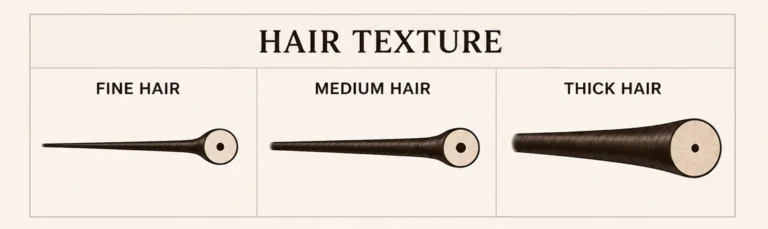
Hair texture refers to the thickness of each individual strand—not how much hair you have.
How to Test Your Hair Texture:
Take one strand of hair and gently stretch it.
– If it breaks easily, you likely have fine hair.
– If it stretches slightly before breaking, you likely have medium hair.
– If it is difficult to break, you likely have thick hair.
This is only a general guide. The most accurate way to determine hair texture is by looking at the diameter of an individual strand.
1. Fine Hair
Fine hair strands are small in diameter and can break more easily.
Best products:
– Volumizing mousse
– Lightweight sprays
– Lightweight conditioners
– Root-lifting products
These products help create body without weighing the hair down.
Check out my post “Best Hair Products for Low Porosity Fine Hair“.
2. Medium Hair
Medium hair is the most versatile texture. It can handle both lightweight and richer products depending on your styling goals.
Best products:
– Lightweight styling sprays for extra volume
– Richer creams or conditioners when more moisture and control are needed
3. Thick Hair
Thick hair strands are larger in diameter and are generally stronger. Because thick hair can become dry or frizzy, it often benefits from richer, more nourishing products.
Look for ingredients such as:
– Shea butter
– Avocado oil
– Olive oil
Hair Porosity
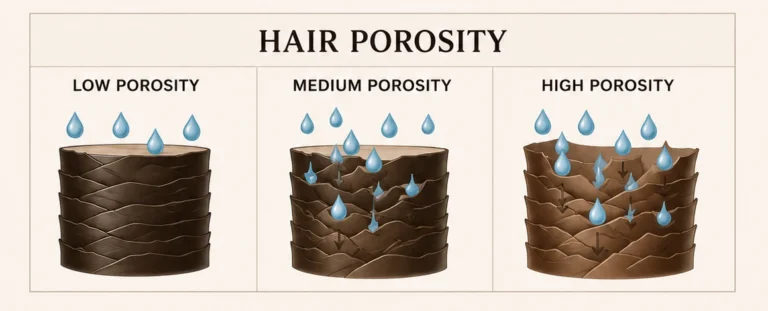
Hair porosity is your hair’s ability to absorb and retain moisture. It determines how easily water, oils, and hair products enter and leave the hair shaft.
For example, if your hair feels dry or rough—especially toward the ends—it may have higher porosity.
How to Test Hair Porosity
– Wash your hair and allow it to dry without applying conditioner or styling products.
– Take one clean strand of hair.
– Fill a glass with room-temperature water.
– Place the strand in the water.
– Wait about 15 minutes.
Results
1. The strand floats on top
You likely have low porosity hair.
Your hair resists absorbing moisture but retains it well once hydrated.
- Oils that work well with low-porosity hair: Grapeseed oil, jojoba oil, squalene oil and argan oil. These can be mixed with castor oil.
2. The strand floats in the middle
You likely have medium porosity hair.
Your hair absorbs and retains moisture easily and generally requires the least maintenance. Medium porosity hair responds best to balanced hydration and light to medium-weight oils.
- Oils that work well with medium-porosity hair: Grapeseed oil, jojoba oil, sweet almond oil and argan oil.
3. The strand sinks to the bottom
You likely have high porosity hair.
Your hair absorbs moisture quickly but also loses it quickly, so it often benefits from moisturizing and sealing products.
- Oils that work well with high-porosity hair: Shea butter, olive oil, avocado oil, coconut oil, and argan oil.
Environmental Factors Matter
Your environment can have a significant impact on how your hair behaves.
In Humid Conditions
Avoid using too many styling products.
Excess product can make waves appear heavy or increase frizz.
Opt for lightweight formulas that provide hold without buildup.
If You Have Hard Water
Consider installing a shower filter. Hard water can leave mineral deposits on the hair, making it feel dry, dull, or difficult to manage.
Water Pressure
Avoid extremely high water pressure when washing your hair, as it can cause tangling and unnecessary stress on your hair and scalp.
Weather-Based Product Recommendations
Dry Weather
When the air is dry, add moisture with:
– Lightweight hair oils
– Hydrating leave-in conditioners
– Moisturizing creams
Humid Weather
When humidity is high, choose products that help control frizz and maintain wave definition:
– Lightweight mousse
– Lightweight gel
– Anti-humidity styling products
These provide hold without making the hair feel stiff or heavy.
Recommended Washing Frequency
Wash your hair approximately every 3 days, adjusting based on your scalp’s oil production, activity level, and lifestyle.